
Music and Ritual in a 16th Century Florentine Convent
VOICES & SOFT INSTRUMENTS
Tutor: Laurie Stras
Wilmslow United Reformed Church
Reviewer: James Walton
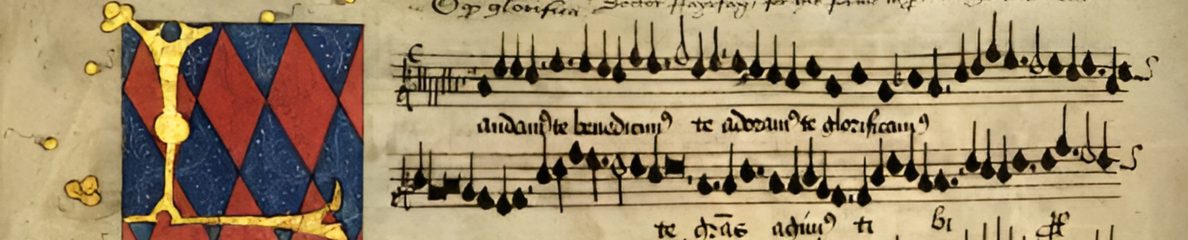
A brisk walk, a back seat ride on the number 35, a delayed train to Piccadilly, a just-made-it-with-less-than-a-minute-to-spare connection on Platform 12 and another, brisker – much brisker – walk was the happy first chapter of a Saturday well spent with three of my teenage daughters at the start of the February half term break. We were heading for Wilmslow United Reformed Church not to partake of the glamorous potato festival going on in the hall, nor to assist with the construction work in the cellar, but to travel back in time, wimples at the ready, to a 16th century Florentine convent of Poor Clare nuns under the guidance of singer, conductor and musicologist Laurie Stras. Laurie, despite a recent run-in with the dentist, enthused, educated and enlightened us all (there were about 25 singers and a dozen instrumentalists) with the fruit of her research: the polyphony of the Biffoli-Sostegni manuscript, the only surviving manuscript of polyphonic repertoire from a sixteenth-century convent.
A day of intense sight reading was going to be a good brain workout for all of us, but we came away with so much more than that: the Biffoli-Sostegni manuscript is a unique window through which we can hear a tantalisingly small but glorious sample of the liturgical and paraliturgical music of Renaissance Europe and the spiritual, cultural and communal lives of the cloistered women who sang – and perhaps even composed – the pieces within it. San Matteo convent was a small and, in Laurie’s words, “incredibly modest place – nothing special”, and yet how special this music is! The repertoire we focussed on was a mix of simple and complex, homophonic and polyphonic, three-part and four-part pieces, transcribed and edited from the manuscript by Laurie herself, and all for upper-voices. The lowest line, the fraudulently named “bassus”, was a positively squeaky experience for the men (there were four of us singing), but we were given ample assistance from the instrumentalists: recorders, viols and organ continuo, and ample sustenance from the fine selection of home-baked cakes, cookies and focaccia that we sampled at breaktime and lunch.

We started (and finished) with an anonymous setting of Psalm 132, Ecce quam bonum, the simplest piece of the day, and a history lesson in itself. Ecce quam bonum et quam iocundum habitare fratres in unum translates, “Behold how good and how pleasant it is for brethren to dwell together in unity,” a regular part of the Divine Office, yes, but also the rallying cry of the revolutionary Dominican friar, Girolamo Savrinola, whose distinct face appears in the illuminated E of the Biffoli-Sostegni manuscript itself (a helpful facsimile was provided in the workshop booklet). This and several other details throughout the day reminded us that the religious sisters, whilst not of this world, were very much in it, with history and geography, politics, pestilence and siege warfare marking them and the music they have left behind. Another striking example of this came later in the Gloria from the three-voice Missa Je le larray, but more on that later.
A short Adoremus te Christe with its contrasts of long expanses and lively triple rhythm, gave us a taste for the many little gorgeous “gestures” of this enchanting sound world. The highlight of the next piece, In illo tempore vidit Iesus from the Gospel for St. Matthew’s day – the patronal feast of the convent – was surely the occasional and unexpected E flat in a piece otherwise firmly in F major. There is a little chromatic word painting in the last example, to highlight that Jesus came “not to call the just, but sinners”, the repentant sinners fitting in appropriately with their e-naturals whilst the proud Pharisees just can’t help putting their foot in it with a little chromatic defiance. These musical feast-day treats were accompanied by other luxuries on St. Matthew’s day: account books from the convent show that meat and even an ounce of pepper were bought to mark the annual celebration.
After the instrumentalists had played the chanson Je le larray puisqu’il me bat by Antoine de Févin – what a treat to sit back and listen! – we all tackled the Kyrie and Gloria from the Mass of the same name, a unique parody Mass because the tune of the chanson is completely preserved in the tenor line of the Kyrie. With its canon at the minim, its parallel fifths – some real and some apparently phantom – and its octave leaps (“Hold on to your part for dear life,” said Laurie), the Kyrie really was extraordinarily and wonderfully strange. Memories of cruel times, specifically the siege of Florence with its plagues and starvation, made their mark on the music of the convent; embedded within the Qui tollis movement of the Gloria is a musical quote from a 1520s motet that pleads for salvation from plague: the brutal, fatal horror of the siege was clearly a real part of the shared memory of the community – yet another poignant reminder that these angelic singers lived human lives.

The four-part litany, Sancta Maria, sancta Dei genitrix, with a cantus firmus taken in turn by each part, ends uniquely with the words Sancta mater navigantum, “Holy Mother of sailors”, a nod, perhaps, to the merchant families to whom many of the San Matteo sisters belonged: they were not of aristocratic stock like their colleagues in the bigger convents of Florence. If such music was going on at the modest San Matteo, “goodness knows,” said Laurie, “what would have been happening elsewhere.” Alas, several bars of this piece had been eaten away by acid over the centuries, so we on the bassus line had the honour of singing three bars made up entirely by Laurie herself, and very enjoyable they were, but the best music of the day was saved for after lunch.
Stomachs full, the Dixit Dominus, with verses of sublime plainsong alternating with sumptuous homophony, was perhaps the closest we got to the sound of the typical daily life of the sisters. Laurie insisted, quite rightly, on getting the chant just right – with its 16th century-flavoured phrasing and pausing – and then singing the chordal parts as if we were simply extemporising on the chant, and it was stunning! I would have carried on with that all day, but the workshop held even greater treasures to come.
The Sancta Dei Genitrix, possibly sung to accompany the many masses for the dead (an essential source of income for the community), or on Saturday evenings as a little extra-liturgical Marian treat, is a four-part canon at the unison which is extremely unusual for a 16th century piece – at least as far as can be surmised from surviving evidence. Laurie was clearly very excited about this, and rightly so. The scales going in different directions and notes piling up, pancake-like, created a “mush of sound”. Is this an example of a student exercise attempted by one of the younger nuns? We may never know.
Likewise, we may never know who composed the Recordare – attributed in the manuscript to Josquin – which, to use Laurie’s words, is “truly weird” indeed, with tritones sprinkled all over the place, and c-naturals and c-sharps quite happily at home together. The Recordare is a Marian offertory “proper” text for the feast of the Immaculate Conception which pleads for the Virgin’s intercession, and this not-quite-Josquin setting includes a trope which resonates with the nuns’ story of exile and longing for home: “Well-disposed one, excellent mother, drive away vices, bring remedies to sinners on their journey, giving them in their home the joys of life.” Powerful words, and what powerful music! Laurie drew our attention to the repetitive, meditative, lectio-divina-like experience of being immersed in such weirdness; it was moments like this which made the trek to Wilmslow well worth it. We were not singing songs, not performing pieces, but sharing just a little something of the spiritual reality of these people of the past whose lives were so different from our own.
The first thing in the Biffoli-Sostegni manuscript is the Missa Recordare virgo Mater, a polyphonic Mass based on the Recordare motet above. Perhaps, Laurie told us, this very Mass setting was the “Lightning Mass” sung in honour of Our Lady each year on March 16th in thanksgiving for the convent’s survival of a lightning strike. This would certainly explain its place of honour as first in the manuscript. Laurie took us through the final movement: the stunning three-fold Agnus Dei, with its divine dissonances in the first and third parts juxtaposed perfectly with a middle section of plainchant. The manuscript itself makes a joke about this: secundus Agnus vidit lupum at fugit – “The second lamb saw a wolf and fled.”
A final tea break included the welcome opportunity to unburden ourselves of excess money and add to our CD collections. Laurie’s choir, Musica Secreta, has recorded much of the music that she has uncovered and transcribed (CDs and downloads are available via musicasecreta.org), and an album due to be released later this year includes much of what we explored at the workshop, but the only piece from the Biffoli-Sostegni manuscript that we could immediately take home on disc was also the crowning jewel of our day in Wilmslow and the last treasure of the workshop booklet: the Salve Regina.
A personal note: as an impudent papist, the words of the Salve Regina (“Hail, holy Queen, mother of mercy…”), are a well-established and much-loved part of my daily life: it is said or sung at the end of the rosary every day and it is also the Marian antiphon for compline (night prayer) during the warmer half of the year (from Pentecost to Advent). There are countless musical settings of this prayer (if you haven’t heard Handel’s version, you haven’t lived, and Poulenc’s is heavenly, to name but two), so I was surprised to be singing yet another one that genuinely stood out as a masterpiece. To think what other gifts like this might be waiting (or rotting) on shelves and in boxes! The Biffoli-Sostegni setting, rescued by Laurie, has four-part polyphony alternating with phrases from the familiar “Solemn” plainchant setting sung by the top “cantus” line. It’s not easy. “Be aware of moving parts around you,” said Laurie. Moving they were. Thank goodness for the instruments!
As I finish this review, I’m listening to Musica Secreta’s From Darkness Into Light CD: its final track is the beautiful, anonymous Salve Regina sung and recorded professionally. I can’t recommend it highly enough, but I think I prefer the rough and ready recording we made on the day which you can hear on the NWEMF website. Thanks to Laurie, Kirsten and everyone involved for putting on such a superb workshop. Behold how good and how pleasant it is for brethren to dwell together in unity.
James Walton
First published in April 2025 Newsletter
Audio file – Salve Regina
Audio file – Sancta Dei genetrix


One thought on “Workshop Review – 15 February 2025”