
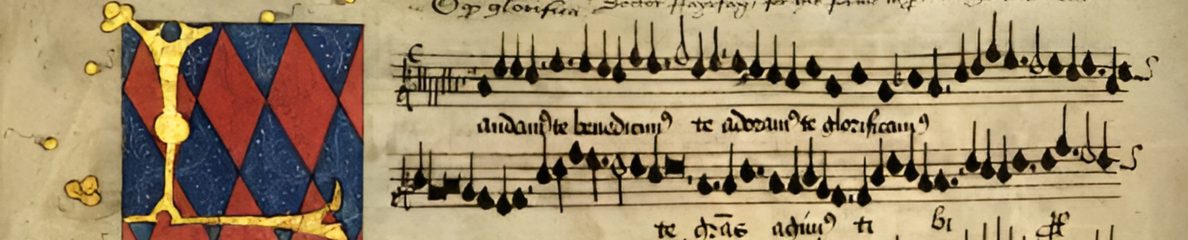

Heinrich Schütz: Geistliche Chormusik
VOICES & INSTRUMENTS
Tutor: Roger Wilkes
Didsbury Baptist Church
Reviewer: Andy Coatsworth
Heinrich Schütz’s father kept an inn, where Heinrich was “discovered” on account of his voice at the age of about 13, leading to his musical education at Court, and for three years in Venice with Giovanni Gabrieli, who appears to have been a lasting influence. Some pictures of important buildings in Schütz’s life were laid out at the rear of the church to help set the context. Heinrich Schütz (1585-1672) was apparently a prolific composer of secular works, but these have almost entirely been lost. In the workshop we performed six of the twenty nine motets that make up Geistliche Chormusik (1648):
Also hat Gott die Welt geleibt
Verleih uns Frieden genädichlich
Gib unsern Fürsten
Die mit Tränen säen
So far ich hin zu Jesu Christ
Selig sind die Toten
These were all in five parts, except the six part “Selig sind die Toten”. This piece proved very popular, and was a good one to repeat at the end the workshop.
Some 16 sixteen singers and about 11 instrumentalists attended the workshop; the approximate numbers given are not just a function of my inability to count – a serious disability in musician – but as some multi-talented people were fluid in their affiliation.
The ensemble was definitely light on tenor voices, which was not ideal as there were sometimes two tenor lines. We were also light on bass voices, but this was alleviated by a very strong bass instrumental line-up of bass viol, bass sackbut and two bass curtals. Our co-President Roger Wilkes asked the recorder players to play a line an octave up, eg great bass on the tenor line etc. Roger mused that Schütz may never had heard these compositions on instruments, though I understand that Schütz stated in the foreword he published with the collection that all parts of the motets can be performed vocally and/or instrumentally.
For a time I was doubling the bass line with David – a very fine bass sackbut player with a huge dynamic range, and most significantly a German linguist. I especially noted how quietly he played the second syllable of Fürsten in the second bar of “Gib unsern Fürsten”, which was a great learning point for me.

Consequently I would like to have understood more fully the dynamics implied in the German text, and whether the relatively inflexible curtal and recorders really have a place in such vocal pieces. Significantly perhaps Roger had called for cornetts and sackbuts in the invitation.
This was not the first NWEMF workshop I have attended at Didsbury Baptist Church, and it a very welcoming space in a location well suited to most NWEMF members. Parking either at the church or on-street is easy. The church appears to have had a major refitting with comfortable chairs in an immaculate interior, and it is bright and well lit, leaving no excuse for not being able to read the music. There are modern toilets, and an excellent kitchen, from which Anna Wright, of both NWEMF and the Church, very kindly and efficiently dispensed tea, coffee and biscuits. However, I think the venue is a little let down by the acoustics, or perhaps how we use the space. I missed quite a lot of what Roger Wilkes said, though not to the extent of starting on the wrong piece. Perhaps a tighter seating formation around the director
would help, rather than simply accepting the chairs as arranged for the church services.
The contrapuntal style of the pieces led to some surprising dissonances, and thus Roger had to field a few queries as to whether a written note was correctly pitched. Throughout the workshop Roger showed his mastery of this type of work and enabled the assembled gathering to perform and enjoy these justly popular pieces.
This was a day well spent. Our sincere thanks go to our Co-President.
First published in the February 2023 Newsletter
