

Music from the Odhecaton
INSTRUMENTS (A=440)
Tutor: Lizzie Gutteridge
Bolton Parish Church Hall, Silverwell Street, Bolton BL1 1PS
Reviewer: Win Ashmore
Enjoyable and demanding in exactly the right proportion – our meeting of twenty or so under the guidance (some with a drum) of Lizzie Gutteridge on a sunny day at Bolton Parish Church Hall on 17th October 2026. Lizzie has put together an instrumental anthology of songs from the Harmonice Musices Odhecaton, published in Venice in 1501, and took us through a selection of these in a perfectly paced day which included tea/coffee (and homebake) breaks and a generous lunch hour in which to catch up – and in my case, as a new member, to meet people.
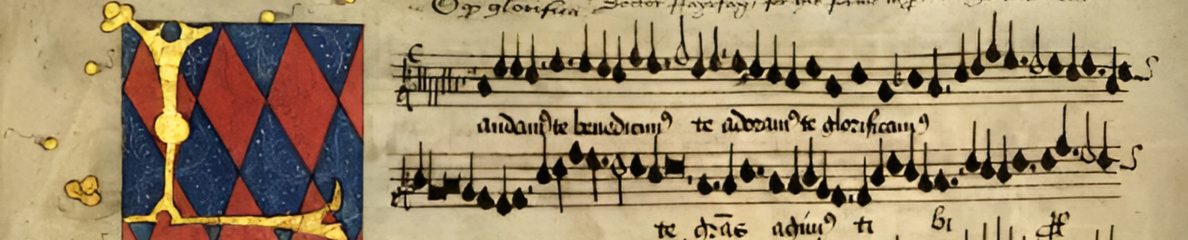
We played a variety of wind and stringed instruments, and were invited to take any of the lines of music we wished, and even to swap about if we chose. Very refreshing, though not by any means lacking in rigour, and we produced some good if not polished performances. As an inveterate recorder player, I enjoyed both the flexibility, and the variety of sound and texture. The music included encouragingly straightforward pieces, a setting by Josquin which included a canon, and an anonymous piece from the Bayeux Manuscript which looked alarming but which, thanks to Lizzie’s skilful help, we managed. I look forward to the next meeting.
Win Ashmore
More information about the day
The Harmonice Musices Odhecaton (One Hundred Harmonic Songs) is an anthology of polyphonic secular songs by Ottaviano Petrucci. It was published in Venice in 1501, and was the first book of polyphonic music ever to be printed using movable type. Many of the compositions are anonymous, but those which are not include works by some of the most famous composers of the time, such as Josquin des Pres, Alexander Agricola, Jacob Obrecht, Johannes Okeghem and Antoine Busnois. For this workshop, Lizzie will take a look at a few of the most famous pieces from the manuscript, alongside some that perhaps deserve to be better known.
The Tutor

Lizzie Gutteridge played violin and clarinet from an early age, and completed a BA in music at Durham University. She took up the shawm as part of the historical re-enactment movement to re-form Waites bands throughout the country. The shawm is now one of her main instruments, along with bagpipes, recorders, curtals and fiddles. She performs up and down the country, in and out of historical costume, as a member of Blondel and the York Waites.
Published in November 2026 Newsletter
