
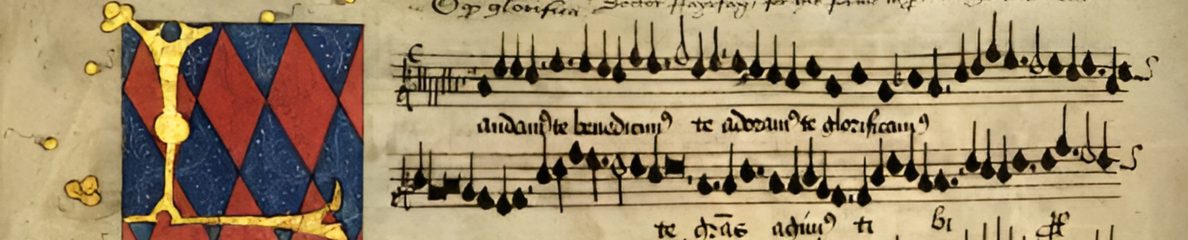

Philippe de Monte, William Byrd and Thomas Tallis
Ceremony and Devotion – William Byrd and his circle
VOICES
Tutor: Sally Dunkley
Location: All Saints Church, Chester
Reviewer: Kirsten Flores
When I first saw that Sally Dunkley was leading a workshop in November, I jumped at the chance to sign up. I have only been a NWEMF member for just over a year, and so I missed the last workshop she did in 2017 in Didsbury on the music of Rogier. But I have been a huge fan of The Tallis Scholars and The Sixteen for over 30 years, and so for me this workshop was a chance to meet one of my heroes of Renaissance sacred polyphony.
The workshop took place at All Saints Church in Chester, easily accessible from the motorways with plenty of parking. The church itself is a beautiful 19th century red sandstone Grade II listed building, with a lovely warm acoustic and ample space for the 50 or so singers who attended, with roughly equal numbers across all parts. People had come from far and wide, with one lady flying over from Belfast just for the day, and there were also contingents from Wakefield, West Yorkshire, and Oxfordshire. Sally’s reputation had most definitely preceded her.
The workshop itself was to explore the music of Byrd (1539/40-1623) and his contemporaries, during a time of great prejudice and persecution. After a welcome cup of tea, we picked up the scores for seven pieces (most of which were set by Sally herself) and sat in the pews to start the day with a gentle warm up. Sally led the workshop with charm, wit, intelligence and humility, and for each piece, she explained much of the historical, political and religious context which deepened our enjoyment of the music.
The first piece was Byrd’s six part setting of “O Lord, make thy servant, Elizabeth”, probably written shortly after Byrd joined the Chapel Royal in 1572. Filled with beautiful smooth lines and luscious false relations, this has one of the best Amens of the repertoire. This piece was circulated several times in the years that followed Elizabeth I’s death, and you can date the versions based on which monarch’s name is used. But with so much music to get through, we moved on fairly quickly to the well-known five part setting of “Ave Maria” by Robert Parsons (c.1535-1572). Not much is known about Parsons, other than Byrd succeeded him as Gentleman of the Chapel Royal after his demise when he “drowned at Newark upon Trent the 25th of Januarie, and Wm. Bird sworne gentleman in his place…” But the music he wrote during his short life is just beautiful.
Next we spent some time on a seven part setting by Thomas Tallis (c.1506-85), “Loquebantur variis linguis”. This is often used as the opening concert piece by The Tallis Scholars because it is full of energy, includes all voices, and is filled with crunchy false relations and startling cross rhythms. It is a Pentecost Matins Responsory with an account of the apostles speaking in tongues. Given the energy and movement of the piece, Sally speculated that Tallis may have used word painting to some extent. The cantus firmus is written in the tenor line (and Sally duly apologised to the tenors) – she remembered hearing it referred to as “the Gumby line”, although she didn’t know why. I overhead one of the basses suggest it may have been a reference to TS Eliot’s poem, “The Old Gumbie Cat”, who “sits and sits and sits and sits” all day, which seems a fair description of that particular line!
A short tea break primed us for another Byrd piece, this time the beautiful motet for eight voices, “Quomodo cantabimus”. This was written by Byrd in 1584 as a reply to Phillip de Monte’s “Super flumina Babylonis” sent to Byrd the year before. De Monte’s motet was a setting of the first three verses of Psalm 137, and Byrd responded with a setting of the next four verses. Although written in a major key, the text is more sombre (“How shall we sing the Lord’s song in a strange land?”). One of the visiting singers shared his insightful thoughts on how Byrd had changed the order of the verses, possibly to reflect his own feeling of alienation as a recusant Catholic in a newly-Protestant England.
After singing through the full piece, Sally then dissected the opening lines to show their canonical nature – understanding the structure of the piece has certainly helped me appreciate it even more. And then we were up on our feet! Sally invited us to stand in a different position, next to new people, preferably not singing the same part, so we could experience the music in a new way. I found this extremely helpful as it made me concentrate more, and I could also hear this richly textured music in a completely different way. This was the first of many times we moved about during the course of the workshop, and it was a good way to wrap up the first half of the day.
The post-prandial session began with a setting of the Compline hymn for Lent by Robert White (c.1538-74), “Christe, qui lux es et dies [IV]”. Sally said this would be one of her desert island discs, and I can certainly understand why. Plainchant verses are intercut with five part polyphony of extraordinary beauty. We performed this at high pitch, which gave the sopranos some lovely top As to float about on, helped by some technique pointers from Sally. We rearranged ourselves again for the final sing through, and there was a real sense of reverence, solemnity and profound beauty.
We were to return to another setting of this hymn as a “compare and contrast” exercise, but not before we enjoyed the little known five part setting of “Laboravi in gemitu meo” by Alfonso Ferrabosco I (1543-1588). The elder Ferrabosco (he had a son of the same name who was also a composer) visited the Elizabethan court, possibly as a spy, and it is almost certain that he influenced Byrd during his visit. This motet is rather lush, albeit short, with a lovely rising motif running through all parts on the final page. The words, however, are a little gloomy – “I am weary with my groaning; all the night make I my bed to swim; I water my couch with my tears”. I am pleased to report that not a tear was shed during our rendition.
For the last piece of the day, we returned to the hymn, “Christe, qui lux es et dies”, this time set by Byrd for five voices. This was very different from the White setting, but equally impressive. The first and last verses were plainchant, and the inside five verses were almost entirely homophonic. In another mark of Byrd’s genius, the plainchant theme was given to each of the voices in turn, and Sally had each of the sections stand up when it was their turn to sing it. Once again, this brought a new understanding to the structure of the music (and also gave us a bit of exercise).
In the final section of the day, we recapped all the pieces we had sung. Sally had us on the move again for each piece, sometimes standing randomly, sometimes in a circle, making full use of the ample space in the church. This helped maintain concentration right to the end, and we were able to experience the music in new ways once more. I would love to see these final sing-through sessions advertised in advance and open to the public – not only could we share the fruits of our efforts, but I suspect having an audience would help us raise our game at the end of a tiring but enjoyable day.
All in all, this was a wonderful workshop, very well attended and extremely well led by Sally Dunkley, who is passionate about the repertoire and has a talent for sharing this with others, bringing us to new levels of understanding and appreciation of the music.
Kirsten Flores
First published in February 2020 Newsletter
