
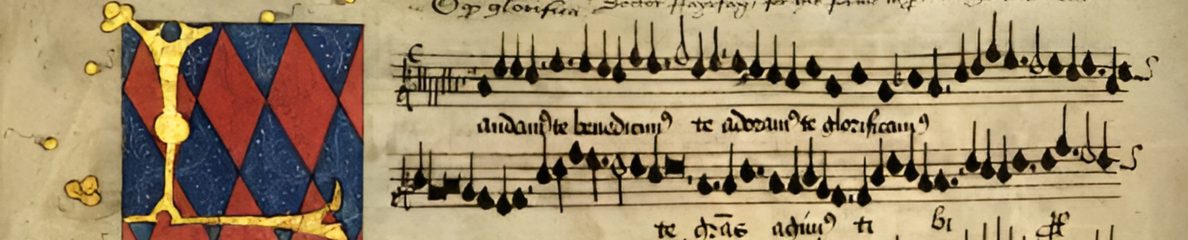

The sacred music of Dominique Phinot
VOICES
Tutor: Paul Spicer
Location: St Wilfrid’s Church Hall, Grappenhall
Reviewer: Lucy Crispin
Who was Phinot? Why was the church hall still locked? And where were the missing tenors? These were the questions with which I arrived for this workshop. Questions two and three may remain forever unanswered, but at least now I can say some things in answer to question one! Even more pleasingly, I now have a desire to go out and evangelise for Phinot. I suspect I am not alone in this.
Of the 35 workshop participants, only two had heard of Phinot previous to signing up. Before warming us up, our leader-for-the-day, Paul Spicer, gave us some information about the composer, describing him as a ‘delightful discovery’, a bewilderingly neglected forerunner of Palestrina who had had some considerable influence on those who followed, and who was instrumental in developing chori spezzati. Phinot lived from c. 1510-1558. The fact of his eventual execution for “homosexual practices” may possibly have something to do with any later suppression of his fine music.
We began by looking at the Kyrie and Gloria from the Missa Si bona suscepimus, which was based on a motet by Claudin de Sermisy. As the standard of reading at the workshop was high, we were able to concentrate on the colour and line of the music. In these movements, as in the other works we looked at, Paul asked us to prepare our notes carefully for entries and to remain aware of the anchor pitch of our particular line. We also thought about the need — at times — for (controlled!) lyricism; the importance of lightness and ‘lift’ in our quavers; and, always, the desirability of shading-off phrases so that different lines might come through the texture: for optimum effect, what goes up must come down! A certain Cumbrian choirmaster of my acquaintance was delighted to have his own — frequently-repeated — words echoed…
We then moved on to look at the motet Pater peccavi in caelum which shared with some of the Mass movements an exquisitely imploring tone. A setting of the prodigal son story, the motet voices the son’s sense of unworthiness to be received and loved by his father. The effort of steering us through our first reading of the work, and holding the ensemble together —particularly through the remarkable modulation in the latter part — was enough to give Paul a nosebleed! It seems quite fitting, though, given that this section was what Paul described as ‘turning the knife’ music… Once the modulation from C sharp minor to C minor was accomplished, the music had a sense of increased calm, a dropping-away from intensely impassioned anguish, as the son experienced the relief of facing his pain and guilt. The word-painting was remarkable; and Paul encouraged us to keep clear images in mind as we sang. These informed both our appreciation and our performance of the music.
In the afternoon we sang through Phinot’s double choir setting of incipit oratio Ieremiae prophetae. A splendid work which we could imagine ringing round a grand space, the lamentations helped us power through any post-lunch torpor. We then returned to the Mass, working on the Sanctus and Agnus Dei, where we enjoyed the changes in texture and colour brought about by variations in the number of voices singing. The upper voices got the chance to enjoy the lower voices’ pleni sunt caeli before picking up the speed a little as we went tutti for the first hosanna; and similarly, the basses dropped out of the benedictus before rejoining for the closing section. As you will infer, then, those tenors who had appeared did work very hard!
A final sing-through of the works we’d spent time on closed a busy and interesting day. The text of the motet on which the Mass was based asks: ‘If we have received good things from the hand of the Lord, why should we not endure bad things?’. This workshop was definitely one of the good things.
Lucy Crispin
First published in April 2015 Newsletter

