
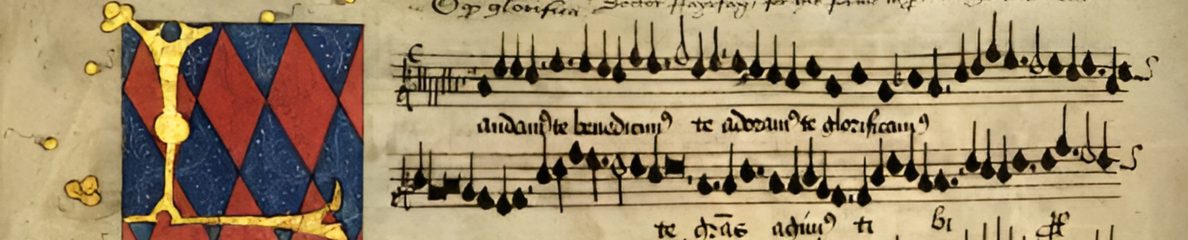

Ludford and Tallis
VOICES
Tutor: Peter Syrus
Location: St. Nicholas Chapel on the Cholmondeley Castle Estate
Reviewer: Hugh Cherry
Singing at Cholmondeley – Ludford and Tallis
The music from these two composers crosses the divide between the early renaissance English style of Nicholas Ludford (c1485-1557) and the later style of William Byrd’s great teacher and collaborator Thomas Tallis ( c1505-85). This workshop was held in St. Nicholas Chapel on the Cholmondeley Castle Estate – a location which could not be more rural and peaceful. The Chapel itself was originally built in medieval times as a result of a petition from the local people, who could not get to Malpas to bury their dead because of the fighting with the Welsh across the border. It has been heavily reworked over the years, but contains one of the finest collections of 17th century church furniture in the country. It is a small cruciform building and was most suitable for this music – some of which could have been heard within its walls when it was first written, although given its very remote location, maybe not!
The music we sang provided a fascinating contrast between Ludford’s rich and varied, but perhaps rather austere, textures, and Tallis’ classically gorgeous use of dissonance, particularly in his late works. To connect these we had some early Tallis pieces that helped to show this change in style was an evolution rather than a sudden dramatic conversion. Ludford spent most of his working life in the Henry VIII’s royal chapel of St. Stephen in the Palace of Westminster in London, and lived to quite a great age for those days, although not quite as long as Tallis. He seems not to have composed much after around 1535, so he belongs firmly to Henry VIII’s reign as opposed to Tallis whose long working life crossed into Elizabeth’s reign and the peak of late renaissance polyphony. Unlike Tallis he seemed to receive no royal recognition, not even being a Gentleman of the Chapel Royal, but has given us 11 complete masses and 3 incomplete ones, and should be regarded as one of the finest English composers of his generation.
He seems to have been fond of large scale and contrasting textures, and of the 4 mass movements we had for study, two were 5 part and two were 6 part. The heritage of The Eton Choirbook style is evident in occasional complex rhythmic passages that perhaps we did not always render quite how Ludford would have intended, but these were usually, although not always, reserved for the reduced voice sections. Most of the mass movements we sang started and ended with full voices and all had reduced voice sections – sometimes dropping to just two voices for a while. The style was entirely approachable to modern ears and it certainly made many of us feel his music should be more widely performed. Notably, however, versus the Tallis pieces, he seems to have developed a successful style and stuck to it – the four mass movements seemed, to an untutored ear, to follow more or less the same rules of style – there was not an obvious development be tween them (although the chronology is not at all clear).
The Tallis pieces covered a much wider range, from his early Sancte Deus to the late Derelinquit Impius, and from four to seven voices. Unlike the Ludford, Tallis (at least in these pieces) stuck to the full texture with no formally reduced voice passages, and the style noticeably changed through the years. He seems to have lost none of his originality as time passed, and to modern ears the later pieces are more striking. Even his early works, however seemed very distinctly different from Ludford’s, perhaps reflecting continental influences as well as the sheer passage of time, although the two composer’s active lives just overlapped, and as they both worked all their lives around London must have known each other. So perhaps Ludford represented a mature development from the Eton choirbook style and Tallis as a young composer in the 1530’s was breaking out and moving on to new worlds.
The workshop was very well attended, with about 40 singers and was well balanced between the parts. The programme of music was very well chosen, based on Peter’s encyclopaedic knowledge of the period, and, for me did two things: it introduced Ludford’s music in a very convincing way but also reinforced the reputation of Tallis as one of the greatest of 16th century composers. At the same time, on occasions, Ludford’s stable and well-worked out style might perhaps be preferred to Tallis’s extraordinarily beautiful and sometimes agonising use of dissonance. Luckily we don’t have to pick one or the other, but can listen to and sing both of these composers, thanks to Peter’s efforts in producing modern editions of this music and exercising his patience in running workshops for us.
First published in September 2012 Newsletter
